
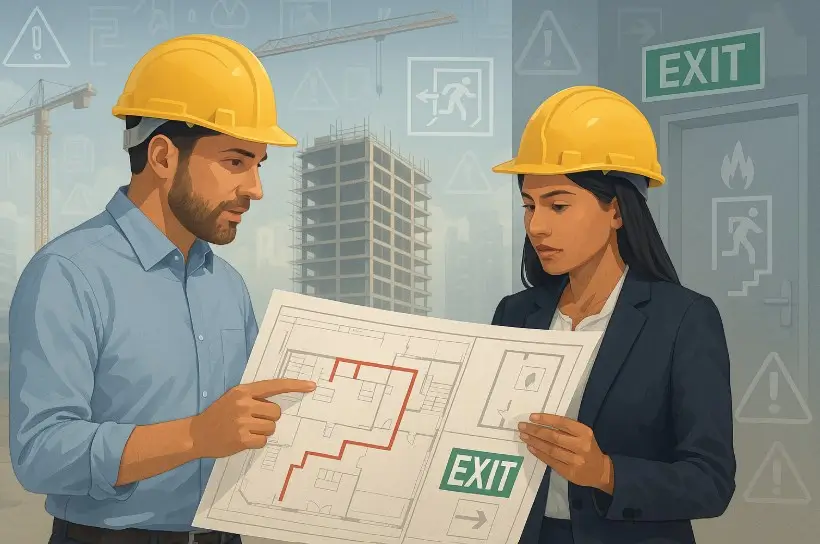
In Malaysia, fire safety isn’t just best practice—it’s the law. The Uniform Building By-Laws (UBBL) 1984 sets minimum requirements for escape routes, fire resistance, compartmentation, access for fire appliances, and more. When designs miss these requirements—or when later interpretations reveal gaps—projects face delays, costly rectification, and potential negligence claims against the design team. That’s why strong compliance habits and the right professional indemnity insurance (PII) matter.
What the UBBL expects (in plain English)
UBBL defines how many stairs you need, how wide they must be, where protected routes go, how smoke control works, and what qualifies as a safe “final exit.” Local authorities can reject plans that don’t meet these baselines. For architects and engineers, the legal “reasonable skill and care” standard usually assumes UBBL compliance.
How non-compliance becomes a claim
Egress miscounts
Occupant loads grow (e.g., cinema/retail mix). Stair widths or exit numbers no longer comply; authorities require another protected stair and smoke-proof lobbies. Owners claim delay and variation costs.
Passive fire detailing gaps
External escape stairs aren’t adequately shielded from façade fire; remedial fire-rated walls/doors are ordered.
Updates you missed
Amendments or circulars shift expectations on cladding, fire doors or escape definitions. Earlier drawings now fall short.
Your duty—and the contract context
Engineers (via BEM) must place public safety first and only certify work under their control. Architects are regulated under the Architects Act. Standard forms like PAM 2018 help allocate who designs what (e.g., smoke control, evacuation modelling), which becomes critical when apportioning liability.
Where PII helps most
Good professional indemnity insurance for architect and professional indemnity insurance for engineers typically funds:
- Defence costs (lawyers, expert witnesses)
- Damages/settlements if you’re found liable
- Pre-claims assistance when you spot a circumstance early
- Inquiry attendance and PR expenses (where included)
- Helpful extensions (loss of documents, defamation, subcontractor liability, joint-venture liability, run-off, continuous cover—subject to your wording)
Quick risk checklist
Document UBBL clauses and occupant loads in a Design Basis Report, keep an authority liaison trail, peer-review egress/smoke control/bed-lifts/façade fire spread, assign specialist scopes clearly, and log changes with dated mark-ups. Right-size your PII limits to the project profile and potential liquidated damages exposure.
Authoritative Resources
- UBBL 1984 – Official Resources (KPKT/Jabatan Kerajaan Tempatan)
https://www.kpkt.gov.my - Board of Engineers Malaysia (BEM) – Acts, Regulations & Code of Conduct
https://www.bem.org.my - Pertubuhan Akitek Malaysia (PAM) – Contracts, Practice Notes & Guidance
https://www.pam.org.my
Key takeaway
In summary, UBBL compliance isn’t just paperwork—it’s a core part of an architect’s and engineer’s legal duty of care in Malaysia. When gaps in fire safety design surface, even unintended ones, they can quickly escalate into delays, rectification costs, and professional negligence claims.
By staying updated on UBBL requirements, documenting design decisions, coordinating specialists, and securing the right professional indemnity insurance, design professionals can protect both their projects and their practice.
With the right habits and coverage, one oversight doesn’t have to become a costly liability.
Need help choosing the right cover? Start with Minaris Risk Management. We’ll help you size limits, compare wording features, and get fast, practical support when it matters most.
Explore our range of coverages:
📞 Ready to secure your future? Contact us today.

Jayadarshiniy Sankar is a Senior Insurance Advisory Manager with a background in law and over 5 years of experience in professional indemnity and general insurance. She specializes in regulatory compliance and client solutions, delivering tailored coverage with prompt, results-driven support while actively educating clients through industry content and guidance.