
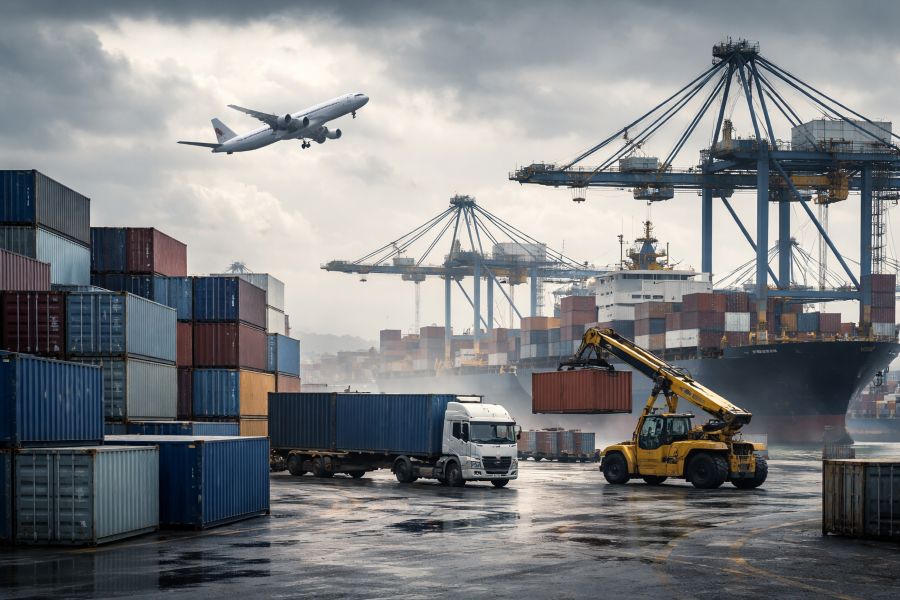
Global trade depends on stability. However, in recent years, geopolitical tensions, regional conflicts, and disruptions to international trade routes have become more frequent.
For Malaysian exporters, importers, and logistics companies, this raises an important question:
What happens if cargo is damaged or lost due to war-related events?
This is where Institute War Clauses (Air Cargo) become relevant.
Understanding Institute War Clauses (Air Cargo)
Most standard cargo insurance policies exclude losses caused by war or hostile activities. To address this gap, insurers include a separate extension known as Institute War Clauses (Air Cargo) 1/1/82.
This clause provides coverage for loss or damage to cargo caused by events such as:
- War or civil war
- Revolution, rebellion, or civil unrest
- Hostile acts by or against a belligerent power
- Capture, seizure, arrest, restraint or detention arising from war risks
- Damage caused by derelict weapons of war such as bombs, mines or torpedoes
In simple terms, if cargo is damaged due to war-related incidents during transit by air, this clause may respond depending on the circumstances.
Important Exclusions to Understand
Even with war risk coverage, certain losses are not covered, including:
- Loss caused by delay in transit
- Poor packing or improper preparation of cargo
- Ordinary wear and tear
- Loss due to inherent nature of the goods
- Financial default or insolvency of carriers or operators
This means that if a shipment is delayed because airlines avoid a conflict zone, financial losses due to late delivery are typically not covered.
Why This Matters for Malaysian Businesses
Malaysia is a highly trade-dependent economy. Goods frequently move through key logistics hubs such as:
- Port Klang
- Tanjung Pelepas
- Penang Port
- KLIA Air Cargo Terminal
Many shipments pass through international routes that may be affected by geopolitical tensions.
Below are a few real-world scenarios where war risk coverage becomes relevant.
Scenario 1: Shipping Route Disruptions
Recent geopolitical conflicts have affected shipping lanes in regions such as the Red Sea and parts of the Middle East.
Malaysian exporters sending goods to Europe may experience:
- Rerouting of vessels
- Increased freight costs
- Higher insurance premiums
- Longer transit times
While delay itself is generally excluded, physical loss caused by hostile actions during transit could fall under war risk coverage.
Scenario 2: Air Cargo Passing Through Sensitive Regions
Malaysia exports many high-value products via air freight, including:
- Semiconductor components
- Electronics
- Medical devices
If an aircraft carrying cargo is affected by:
- Military conflict
- Hostile seizure
- War-related explosions
the Institute War Clauses (Air Cargo) may potentially provide coverage for the cargo loss.
Scenario 3: Political Seizure or Detention of Cargo
In certain geopolitical situations, governments or authorities may detain, seize, or restrict cargo movement.
If such actions arise from war-related circumstances, coverage may apply under the war clause depending on policy conditions.
However, each claim scenario must be evaluated based on the specific policy wording and circumstances of the event.
Preparing Before the Storm
There is a well-known quote:
“It wasn’t raining when Noah built the ark.”
In global trade, risks rarely give advance notice.
When geopolitical tensions escalate, insurers may:
- Increase war risk premiums
- Restrict coverage for certain regions
- Introduce additional underwriting conditions
Businesses that plan ahead by arranging appropriate cargo and war risk coverage are better positioned to protect their supply chains.
How Minaris Supports Malaysian Businesses
At Minaris Risk Management, we assist Malaysian companies in managing international cargo risks through:
- Marine Cargo Insurance
- Air Cargo Insurance
- War Risk Extensions
- Supply Chain Risk Advisory
Whether you are exporting electronics to Europe, importing machinery from Asia, or managing regional logistics operations, understanding your cargo risk exposure is essential.
Because in international trade, protection should already be in place before the storm arrives.
Frequently Asked Questions (FAQ) About Marine Cargo Service
No. Most standard cargo insurance policies exclude war-related risks. War risk protection is typically provided through separate clauses such as the Institute War Clauses.
No. Losses caused purely by delay in transit are generally excluded, even if the delay is caused by a war-related event.
It may cover capture, seizure, arrest or detention arising from war-related risks. However, the circumstances and policy wording must be carefully assessed.
Companies trading internationally, especially through politically sensitive regions, should consider war risk extensions as part of their cargo insurance program.
Ideally before shipment begins. Once conflicts escalate, insurers may impose restrictions or increase premiums for affected regions.
Speak to Minaris Risk Management
Speak to our risk specialist, our team is ready to assist.
Reference Source

Jayadarshiniy Sankar is a Senior Insurance Advisory Manager with a background in law and over 5 years of experience in professional indemnity and general insurance. She specializes in regulatory compliance and client solutions, delivering tailored coverage with prompt, results-driven support while actively educating clients through industry content and guidance.