
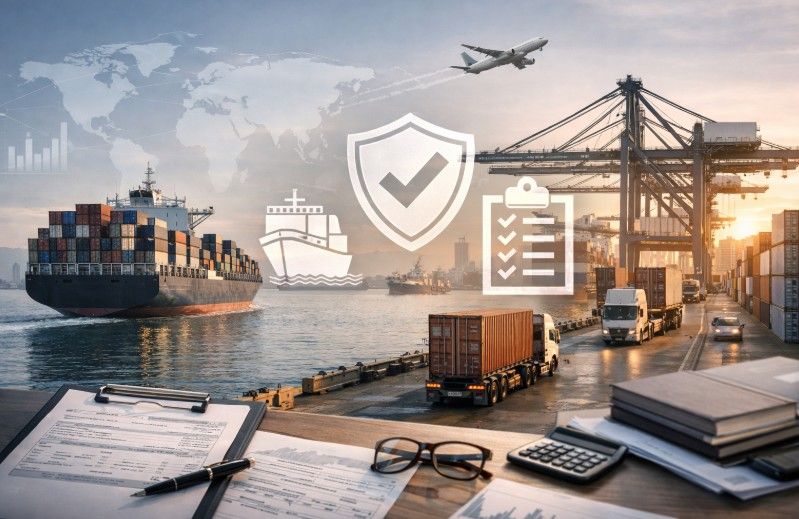
In today’s interconnected economy, goods rarely move in a straight line from seller to buyer. A single shipment may pass through multiple ports, carriers, warehouses, and jurisdictions—each presenting unique risks. From container damage and water ingress to theft, mishandling, or delay, cargo loss remains one of the most common yet misunderstood business risks.
This is why marine cargo insurance is not merely an operational add-on, but a fundamental pillar of supply-chain risk management. More importantly, understanding how marine cargo claims actually work can make the difference between a smooth recovery and a prolonged financial dispute.
This guide offers a comprehensive, insurer-agnostic overview of marine cargo insurance and claims—designed to help business owners, traders, logistics managers, and finance teams navigate real-world scenarios with confidence.
What Is Marine Cargo Insurance?
Marine cargo insurance provides financial protection against loss or damage to goods during transit, whether by sea, air, road, rail, or a combination of these modes. Despite the name, it is not limited to ocean transport.
Coverage typically applies from the time goods leave the point of origin until they reach the final destination, subject to policy terms. This “warehouse-to-warehouse” concept is a cornerstone of modern marine insurance.
Most marine cargo policies are structured using internationally recognised clauses such as:
- Institute Cargo Clauses (A) – Broad, “all risks” cover (subject to exclusions)
- Institute Cargo Clauses (B) – Named perils with moderate scope
- Institute Cargo Clauses (C) – Limited named perils, usually for low-risk cargo
The choice of clause directly affects both premium cost and claims outcome, making policy selection a strategic decision rather than a purely administrative one.
Why Marine Cargo Insurance Is Critical for Businesses
1. Financial Resilience
Cargo losses can range from minor damage to total loss. Without insurance, businesses must absorb these costs outright, potentially affecting cash flow and profitability.
2. Contractual & Trade Requirements
Many sales contracts (e.g. CIF, CIP under Incoterms®) require cargo insurance as part of the transaction. Failure to comply can lead to contractual disputes.
3. Supply Chain Continuity
Insurance enables faster recovery—allowing businesses to replace goods and maintain customer commitments with minimal disruption.
4. Risk Transfer in a Complex Logistics Environment
Even reputable carriers and forwarders have limited liability under international conventions. Cargo insurance fills the gap between actual cargo value and carrier liability caps.
Understanding the Marine Cargo Claims Process
When a cargo loss occurs, the claims process is where theory meets reality. Delays, missing documents, or incorrect procedures often result in reduced settlements or outright claim repudiation.
Below is a structured overview of how marine cargo claims generally work across insurers and markets.
How to Choose the Right Commercial General Liability Insurance for Your Industry
Not all CGL policies are the same. The right coverage depends heavily on your industry type, risk profile, and business scale. Below are key factors to consider.
Step 1: Immediate Notification
As soon as loss or damage is discovered—or reasonably suspected—the insured must notify:
- the insurer or broker, and
- where applicable, the appointed surveyor or claims agent
Timely notification is critical. Late reporting may prejudice recovery rights, especially in cases involving theft, pilferage, or non-delivery.
Step 2: Mitigate Further Loss
Cargo owners have a duty to act as if uninsured. This includes:
- preventing further deterioration (e.g. re-packing, drying, segregation)
- safeguarding salvageable goods
- documenting all mitigation efforts
Reasonable mitigation costs are often recoverable under marine cargo policies.
Step 3: Notify Liable Third Parties
Written notice should be issued—usually within a few days of delivery—to:
- carriers
- port authorities
- warehouse operators
- freight forwarders
This preserves subrogation rights, allowing insurers to recover from responsible parties after settling the claim.
Failure to issue timely notice may weaken or extinguish recovery options.
Step 4: Survey & Assessment
Insurers typically appoint an independent marine surveyor to:
- inspect the cargo
- assess the cause and extent of damage
- determine whether the loss falls within policy coverage
The surveyor’s report plays a pivotal role in claim determination. Cooperation and transparency at this stage significantly influence settlement speed.
Essential Documents for a Marine Cargo Claim
Marine cargo claims are document-intensive by nature. While requirements vary by insurer and loss type, commonly requested documents include:
- Certificate or policy of insurance
- Commercial invoice and packing list
- Bill of Lading / Air Waybill / Consignment Note
- Delivery order and tally sheets
- Survey or damage report
- Notice of claim issued to carriers or third parties
- Photographic evidence of damage
- Repair or replacement quotations
- Customs declaration (where applicable)
- Claim calculation (less salvage, if any)
Well-organised documentation demonstrates professionalism and reduces processing delays.
Common Marine Cargo Claim Scenarios
Marine cargo insurance typically responds to losses arising from:
- rough handling during loading or discharge
- container damage or collapse
- seawater or freshwater ingress
- fire or explosion
- collision or overturning of conveyance
- theft or pilferage
- general average contributions (subject to cover)
Each scenario carries unique evidentiary and procedural considerations—underscoring the importance of experienced advisory support.
Frequent Pitfalls to Avoid
❌ Delayed notification to insurers or carriers
❌ Accepting delivery “clean” despite visible damage
❌ Disposing of damaged goods before survey approval
❌ Incomplete or inconsistent documentation
❌ Assuming carrier compensation is sufficient
Many claim disputes arise not from lack of coverage, but from procedural missteps.
Strategic Role of Brokers & Risk Advisors
Marine cargo insurance is not a one-size-fits-all product. Cargo type, trade route, packing method, transit mode, and contractual obligations all influence risk exposure.
A knowledgeable broker or risk advisor helps by:
- structuring appropriate coverage
- aligning policy terms with Incoterms®
- advising on loss prevention
- guiding insureds through complex claims
This advisory role becomes especially valuable during high-value or time-sensitive claims.
Conclusion
Marine cargo insurance is more than a compliance requirement—it is a strategic safeguard for businesses operating in a volatile logistics environment. While purchasing the right policy is essential, understanding the claims process is equally critical.
From immediate notification and loss mitigation to documentation and survey coordination, each step affects claim outcomes. Businesses that treat marine cargo insurance as part of a broader risk management strategy—not just a premium cost—are better positioned to recover quickly and operate with confidence in global trade.
Further Reading & Industry Resources
- International Union of Marine Insurance (IUMI):
https://iumi.com - Institute of London Underwriters – Cargo Clauses:
https://www.iua.co.uk - International Chamber of Commerce – Incoterms® Rules:
https://iccwbo.org - World Shipping Council – Cargo & Container Safety:
https://www.worldshipping.org - Freight & Logistics Claims Overview:
https://www.freightamigo.com/en/blog/logistics/the-complete-guide-to-cargo-claim-documentation/

Jayadarshiniy Sankar is a Senior Insurance Advisory Manager with a background in law and over 5 years of experience in professional indemnity and general insurance. She specializes in regulatory compliance and client solutions, delivering tailored coverage with prompt, results-driven support while actively educating clients through industry content and guidance.