
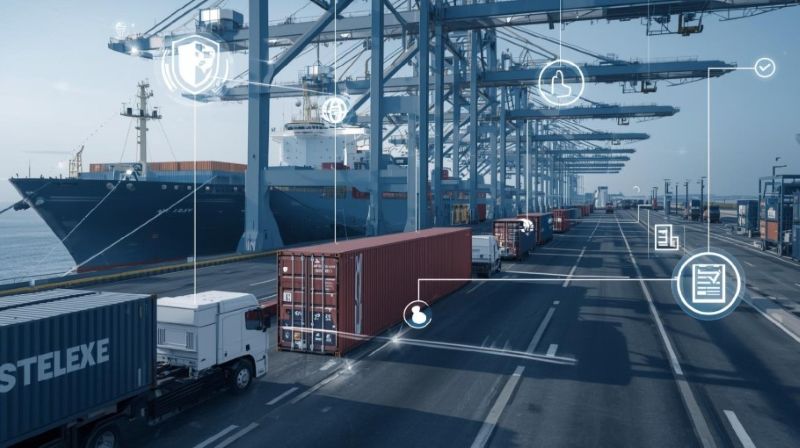
For businesses that ship goods frequently, marine insurance should never slow operations down. Yet many companies still rely on single voyage policies, issuing insurance documents shipment by shipment—adding paperwork, delays, and the risk of human error.
This is where Marine Open Cover (MOC) comes in.
Often misunderstood or underutilised, a Marine Open Cover is one of the most powerful tools available for businesses with regular cargo movements. This article explains what an MOC is, whether it expires, why it exists, and how useful it really is—so decision-makers can determine whether it fits their logistics and risk strategy.
What Is Marine Open Cover (MOC)?
A Marine Open Cover (MOC) is a master marine cargo insurance arrangement that automatically covers all eligible shipments made by the insured within a specified period, subject to declared terms and conditions.
Instead of buying insurance for each individual shipment, the insured enters into a standing agreement with insurers, under which:
- shipments are automatically covered once they fall within agreed parameters;
- declarations are made periodically (monthly, quarterly, or per shipment);
- premiums are calculated based on actual shipment values.
In simple terms, MOC is insurance on standby, always active for declared shipments.
How Marine Open Cover Works in Practice
Once an MOC is set up, coverage typically operates as follows:
1. Master Terms Are Agreed Upfront
These include:
- types of cargo
- transit modes (sea, air, land, multimodal)
- territorial scope
- Institute Cargo Clauses (A/B/C)
- limits per conveyance
- valuation basis
2. Shipments Occur Automatically Under Cover
As long as shipments fall within the agreed terms, they are insured without needing prior approval.
3. Declarations Are Submitted
The insured declares shipments:
- periodically (e.g. monthly), or
- via shipment schedules
4. Premium Is Adjusted Based on Actual Turnover
Final premium reflects real shipping activity, not estimates alone.
This structure eliminates repetitive policy issuance and ensures continuity of cover.
Is There an Expiry for Marine Open Cover?
Yes—but with an important distinction.
1. MOC Has a Policy Period
Most Marine Open Covers are issued for 12 months, aligned with a financial or operational year.
At the end of the policy period:
- the MOC is renewed, renegotiated, or amended;
- rates, terms, and estimated turnover may be reviewed.
2. Shipments Are Covered Based on Transit Timing
Even if a shipment incepts near the end of the policy period, it remains covered until delivery—provided it was shipped during the valid policy period.
3. Declaration Deadlines Still Apply
Some MOCs specify:
- declaration timeframes;
- cut-off periods after policy expiry for reporting shipments.
Missing declaration deadlines can jeopardise coverage—even if the shipment occurred during the policy period.
👉 Key takeaway:
An MOC does expire annually, but its protection extends to shipments made during its validity, subject to proper declaration.
Why Does Marine Open Cover Exist?
Marine Open Cover exists because modern trade is repetitive, fast-moving, and volume-driven.
Issuing individual marine policies for every shipment creates:
- administrative bottlenecks
- inconsistent coverage terms
- higher operational costs
- exposure gaps due to oversight
MOC solves these problems by introducing automation, consistency, and scalability.
Core Reasons MOC Exists
1. To Prevent Coverage Gaps
Missed insurance placement is a common cause of uninsured losses. MOC ensures shipments are insured by default.
2. To Support High-Frequency Trade
Businesses shipping weekly or daily cannot afford insurance delays.
3. To Standardise Risk Management
All shipments follow the same coverage structure, reducing disputes during claims.
4. To Improve Cost Efficiency
Premiums are often more competitive than multiple single-voyage policies.
Is Marine Open Cover Useful? (Short Answer: Yes—But Not for Everyone)
MOC is extremely useful—but only when aligned with the right business profile.
Who Benefits Most from MOC?
✅ Importers and exporters with regular shipments
✅ Manufacturers shipping raw materials or finished goods
✅ Distributors and wholesalers
✅ E-commerce businesses with international fulfilment
✅ Companies using multiple logistics providers
✅ Businesses with fluctuating shipment volumes
If your company ships more than a few times a year, MOC usually delivers both operational and financial advantages.
Key Benefits of Marine Open Cover
1. Automatic Coverage
No need to request insurance approval for every shipment.
2. Administrative Efficiency
Fewer documents, less repetition, smoother workflows.
3. Consistent Claims Treatment
Claims are assessed under a single master wording, reducing ambiguity.
4. Flexible Premium Structure
Premiums align with actual declared shipment values.
5. Better Risk Visibility
Declarations provide valuable shipment data for risk analysis and planning.
Common Misconceptions About MOC
❌ “MOC Is Only for Large Corporations”
Not true. Many SMEs benefit from MOC once shipment frequency increases.
❌ “MOC Means Unlimited Cover”
Incorrect. MOC still has:
- per-shipment limits
- conveyance limits
- cargo exclusions
❌ “MOC Removes the Need for Declarations”
Declarations remain essential. Failure to declare can invalidate cover.
MOC vs Single Voyage Policy: A Quick Comparison
Aspect | Marine Open Cover | Single Voyage Policy |
Coverage | Continuous | One shipment only |
Admin | Low | High |
Flexibility | High | Limited |
Risk of Missing Cover | Low | Higher |
Cost Efficiency | Better for frequent shipments | Better for one-off shipments |
When MOC May NOT Be Ideal
❌ Very infrequent shipments
❌ One-off project cargo
❌ Highly unusual or excluded cargo types
❌ Businesses unwilling to maintain declaration discipline
In such cases, single voyage policies may be more appropriate.
Conclusion
Marine Open Cover is not just a convenience—it is a strategic risk management framework for businesses involved in regular cargo movement. By automating coverage, standardising terms, and improving operational efficiency, MOC allows companies to focus on trade rather than paperwork.
However, its effectiveness depends on:
- correct structuring
- disciplined declarations
- professional advisory support
When implemented properly, MOC transforms marine insurance from a transactional purchase into a long-term operational advantage.
Further Reading & Industry Resources
- International Union of Marine Insurance (IUMI):
https://iumi.com - Institute Cargo Clauses – International Underwriting Association (IUA):
https://www.iua.co.uk - International Chamber of Commerce – Incoterms®:
https://iccwbo.org - World Shipping Council – Cargo Risk & Safety:
https://www.worldshipping.org

Jayadarshiniy Sankar is a Senior Insurance Advisory Manager with a background in law and over 5 years of experience in professional indemnity and general insurance. She specializes in regulatory compliance and client solutions, delivering tailored coverage with prompt, results-driven support while actively educating clients through industry content and guidance.