
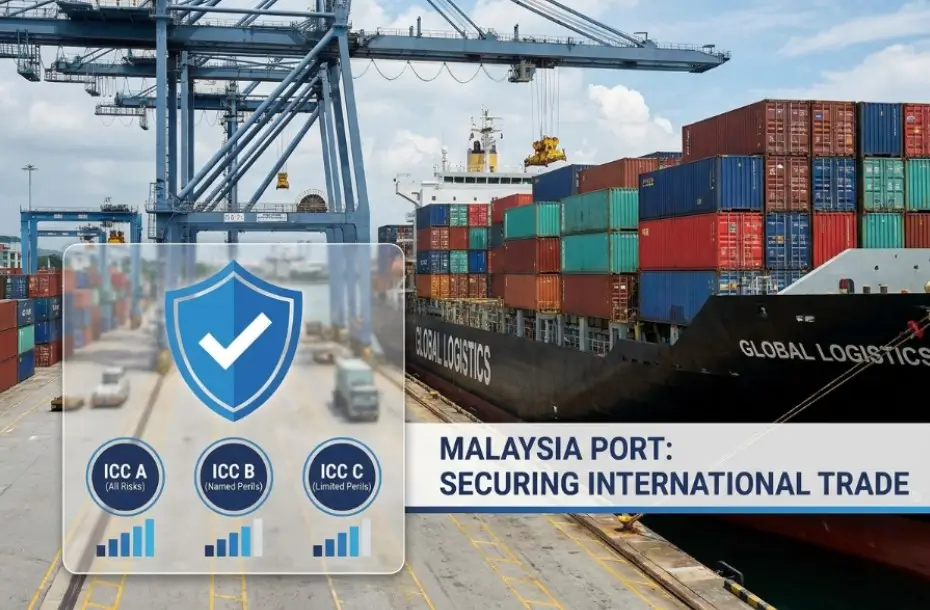
For businesses involved in import, export, or logistics, marine cargo insurance is not optional — it is a critical risk management tool.
Whether you are shipping goods through Penang Port or internationally, one key question arises:
👉 What exactly does marine cargo insurance cover — and what’s the difference between ICC A, B, and C?
Understanding this is essential because choosing the wrong coverage can expose your business to significant financial losses.
This guide breaks down everything you need to know, tailored specifically for businesses operating in Malaysia.
What Is Marine Cargo Insurance?
Marine cargo insurance protects goods against loss or damage during transit by:
- Sea freight
- Air freight
- Land transportation (inland transit)
It applies from warehouse to warehouse, depending on policy terms.
If you’re new to this topic, start with this complete marine cargo insurance guide in Malaysia to understand the fundamentals.
Why Marine Cargo Insurance Matters in Malaysia
Malaysia is a major trading hub, with high cargo movement through ports like:
- Penang Port
- Port Klang
- Johor Port
Risks during transit include:
- Rough handling
- Weather conditions
- Theft or pilferage
- Accidents during loading/unloading
Without insurance, businesses bear 100% of the financial loss.
What Does Marine Cargo Insurance Cover?
Coverage depends on the Institute Cargo Clauses (ICC) selected.
These are internationally recognised standards:
- ICC A (All Risks)
- ICC B (Named Risks – mid coverage)
- ICC C (Basic coverage)
ICC A vs ICC B vs ICC C: Key Differences
Coverage Type | ICC A | ICC B | ICC C |
Coverage Level | Highest | Medium | Basic |
Type | All Risks (with exclusions) | Named Perils | Limited Perils |
Theft Coverage | ✔️ Yes | Limited | ❌ No |
Water Damage | ✔️ Yes | ✔️ Partial | ✔️ Limited |
Handling Damage | ✔️ Yes | ❌ No | ❌ No |
Natural Disasters | ✔️ Yes | ✔️ Yes | ✔️ Limited |
ICC A (All Risks) – Comprehensive Coverage
What It Covers
ICC A provides the widest protection, covering:
- Physical loss or damage from external causes
- Theft and pilferage
- Accidental damage during handling
- Water damage
- Breakage
👉 Essentially, it covers all risks except those specifically excluded.
Best For:
- High-value cargo
- Fragile goods
- Electronics, machinery, pharmaceuticals
- Businesses with low risk tolerance
Key Advantage
✔️ Maximum protection
✔️ Minimal coverage gaps
ICC B – Mid-Level Coverage
What It Covers
ICC B covers specific named risks, including:
- Fire or explosion
- Vessel collision or overturning
- Earthquake, volcanic eruption, lightning
- Sea water entering cargo
What It Does NOT Cover
- Theft (generally excluded)
- Handling damage
- Minor losses
Best For:
- Medium-risk cargo
- Businesses balancing cost and protection
ICC C – Basic Coverage
What It Covers
ICC C provides minimal protection, covering only major incidents:
- Fire or explosion
- Vessel sinking or capsizing
- Collision
What It Does NOT Cover
- Theft
- Water damage (in many cases)
- Breakage
- Handling damage
Best For:
- Low-value goods
- Bulk commodities (e.g. raw materials)
Key Exclusions in Marine Cargo Insurance
Even ICC A does not cover everything.
Common exclusions include:
- Poor packaging
- Inherent vice (natural deterioration)
- Delay in shipment
- War and strikes (unless added)
👉 Learn more about these in this detailed guide on marine cargo insurance exclusions and misconceptions.
ICC Coverage Explained in Simple Terms
To simplify:
- ICC A = Covers almost everything (except exclusions)
- ICC B = Covers specific risks
- ICC C = Covers only major disasters
Real Example: Why Coverage Choice Matters
Scenario:
A Malaysian importer ships electronics through Penang.
- Cargo is damaged during unloading
- Some items are stolen
Outcome:
- ICC A → Covered
- ICC B → Not fully covered
- ICC C → Not covered
👉 This highlights why many businesses opt for broader coverage.
You can explore similar real-world outcomes in this marine insurance case study section.
Types of Marine Cargo Insurance Policies
Apart from ICC clauses, policy structure also matters.
1. Single Voyage Policy
- Covers one shipment
- Suitable for occasional shipments
2. Open Cover Policy
- Covers multiple shipments over time
- More cost-efficient for frequent traders
👉 Learn the difference here: open cover vs single voyage insurance
Marine Cargo Insurance Claims: What You Need to Know
Filing a claim involves:
- Immediate notification
- Documentation (invoice, bill of lading, etc.)
- Damage assessment
👉 For a full process breakdown, refer to this marine cargo insurance claims guide.
Choosing the Right Coverage for Your Business
Consider These Factors:
1. Cargo Value
High-value goods → ICC A recommended
2. Risk Exposure
Longer routes = higher risk
3. Type of Goods
Fragile or perishable items need broader coverage
4. Budget
Balance premium vs potential loss
Marine Cargo Insurance in Penang: Local Context
Businesses operating in Penang benefit from:
- Strategic port access
- High import/export activity
However, this also increases exposure to:
- Handling risks
- Transit delays
- Multi-modal transport risks
Choosing the right marine cargo insurance Penang coverage is essential to protect shipments moving through this high-volume trade hub.
For a tailored overview, explore this guide on marine cargo insurance in Malaysia.
Common Mistakes Businesses Make
❌ Choosing the Cheapest Policy
Leads to insufficient coverage
❌ Not Understanding ICC Clauses
Results in unexpected claim rejection
❌ Underinsuring Cargo Value
Leads to partial compensation
❌ Ignoring Policy Exclusions
Creates coverage gaps
When Should You Choose ICC A?
You should strongly consider ICC A if:
- You ship high-value goods
- Your supply chain involves multiple handling points
- You cannot afford unexpected losses
When ICC B or C May Be Suitable
- Bulk commodities with low value
- Businesses with strong risk tolerance
- Short-distance or low-risk routes
Final Thoughts
- ICC A = Maximum protection (recommended for most businesses)
- ICC B = Moderate protection
- ICC C = Basic coverage only
For businesses trading through Malaysia — especially high-volume hubs like Penang — selecting the right coverage can mean the difference between:
👉 Recovering losses
👉 Or absorbing significant financial damage
If you need expert guidance, consider consulting a specialist like Minaris to assess your cargo risks and recommend the most suitable policy.
Key takeaway:
Understanding ICC A vs B vs C is critical when choosing marine cargo insurance.
Speak to Minaris
Speak to our risk specialist, our team is ready to assist.

KH Chew is the Founder and Risk Advisor of Minaris, with over 30 years of experience in the insurance industry. He holds a Diploma in Insurance from the Malaysian Insurance Institute (MII), which laid the foundation for his in-depth expertise in property, financial lines, and other general insurance products. He is widely recognized for developing tailored insurance schemes for professionals and businesses across Malaysia. KH is also a passionate advocate for risk management and regularly advises clients and trade associations on comprehensive coverage strategies.