


legal firm retroactive date

Protect Your Legal Firm with the Optimal Retroactive Date

Understanding the Importance of the Retroactive Date in Professional Indemnity Insurance

What is a Retroactive Date?

The retroactive date is a critical element in a claims-made Professional Indemnity Insurance (PII) policy. It plays a pivotal role in determining whether your insurance will cover claims related to past incidents. Specifically, the retroactive date marks the earliest point in time from which incidents can be covered under your current policy.

Why Does the Retroactive Date Matter?

Imagine your law firm handled a sensitive case a few years ago, and only recently has an issue arisen that could lead to a claim against you. If this incident occurred after your retroactive date, your PII policy will typically cover it. However, if the incident took place before the retroactive date, your policy will not provide any protection, leaving your firm exposed to potentially significant financial liabilities.

legal firm retroactive date

How It Works in Practice

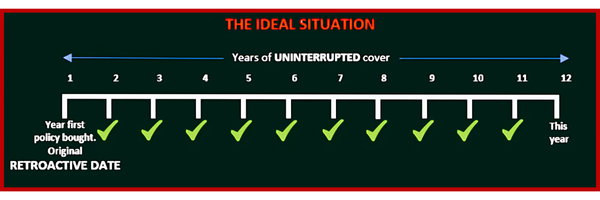
When you first purchase a PII policy, your retroactive date is usually set to the same day your policy begins. This date remains unchanged as long as you maintain continuous coverage. As time progresses, the retroactive date becomes increasingly valuable. It essentially extends your policy’s protection back in time, covering any potential claims for work you did in the past.

For example, if you started your first policy on January 1, 2020, your retroactive date would be set to that date. If a claim arises in 2024 for an event that occurred on February 1, 2021, it would be covered under your policy because it falls after the retroactive date.

legal firm retroactive date

The Consequences of a Lapsed Policy

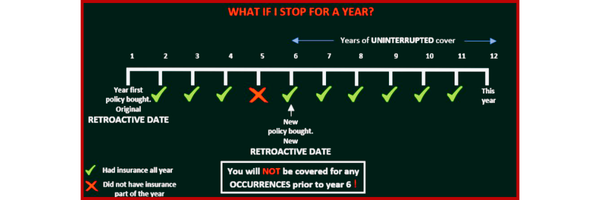
The importance of the retroactive date becomes even more evident if your policy lapses. If you fail to renew your PII policy and later decide to purchase a new one, the retroactive date resets to the start date of the new policy. This reset effectively wipes out coverage for any incidents that occurred before the new retroactive date, leaving you vulnerable to claims for work done during the period covered by your previous policy.

Visualizing the Impact

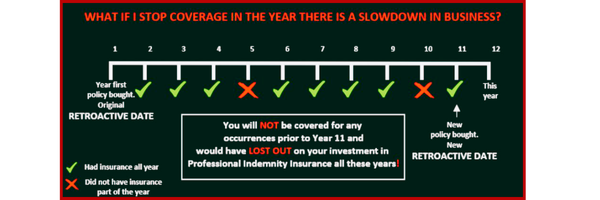
Think of the retroactive date as a protective barrier that extends backward in time. As long as your coverage remains continuous, this barrier shields you from claims related to past work. However, if there’s a break in your coverage, the barrier collapses, leaving your firm exposed to significant risk.

Real-World Example

Consider a scenario where your law firm advised a client on a complex business merger three years ago. Recently, the client discovered an issue in the agreement that could potentially lead to a lawsuit. If your retroactive date precedes the date of the merger, your PII policy will likely cover the claim, safeguarding your firm from potentially crippling legal expenses. But if your retroactive date is later, perhaps due to a lapse in coverage, your policy will not cover the claim, and you could be left to handle the costs on your own.

legal firm retroactive time

In A Nutshell

The retroactive date is not just a technicality; it’s a crucial aspect of your PII policy that ensures your firm is protected against claims related to past work. Understanding its significance and maintaining continuous coverage is essential for safeguarding your legal practice’s financial health and reputation.

Leave a Comment

Your email address will not be published. Required fields are marked *